
Unconquerable Not Anymore: The Reasons The Indian Red-Ball Cricket Reputation Is in Tatters
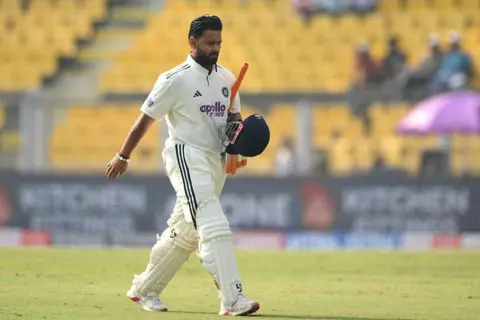
The Indian cricket team's surprising 0-2 loss to the Proteas in the recent Test series has sent shockwaves through the squad.
Earlier this week, the visiting team inflicted upon India a record loss in Test cricket, against all odds. This represented the Proteas' initial series triumph in the subcontinent in two and a half decades and India's another home failure in just one year after a 12-year unbeaten run.
The momentum built over the past six months has almost disappeared and the futures of several players - including team coach the coach - are now uncertain.
Early Optimism Vanishes
The young team's impressive performance in England this season, under a new captain, suggested a seamless changeover after the almost concurrent exits of key players Ashwin, Rohit Sharma, and Kohli.
A straightforward 2-0 victory over West Indies at the commencement of the home season strengthened that view, until the South Africans came and inflicted a devastating defeat.
India were a bit unlucky that leader Gill suffered an injury quickly in the opening Test and was ruled out in the contest. Yet that neither explains nor absolves the squad of the terribly sub-par showing in the two games against South Africa.
A number of star cricketers were damaged, and a few members aspiring to long red-ball careers were exposed as still inadequate - in ability or temperament - for the longer format.
Worrying Trend
It was the second series sweep at home suffered by India in just a year. In 2024, underestimated New Zealand had achieved a staggering 3-0 victory which practically cost the hosts a berth in the WTC final.
The fresh failure to the Proteas risks harming the team's hopes of making the final of this edition too.
Previously ranked third in the WTC table ahead of the matches, the side have been relegated to number five. Though nine further games are yet to be played, a majority are against the Aussies. Usually, playing at home would be a significant benefit - even when facing the strong Australian side. Yet the debacles against the Kiwis and the Proteas leave little scope for that confidence.
Causes of the Fall
India's vulnerability in the longer format has been badly exposed. However, the reason the team have performed so poorly in Test matches on home soil lately is still bewildering.
From the year 2000 onwards, India were regarded as unbeatable in red-ball cricket at home. In demanding climates and on surfaces that assisted spinners and suited their batsmen and bowlers, the hosts faced little challenge. A rare failure, such as in the 2012-13 season against the English, was viewed as an exception.
Currently, the team look to be beatable at home.
Facing the Kiwis in last year and the Proteas this year, the home side were defeated by their own tactics. The tracks they developed to suit their strengths went wrong completely, as opponents exploited them better, outplaying the Indian batters and bowlers when it mattered most.
What Happened?
Certain analysts propose that the Indian team is struggling at home because domestic pitches have been modified from spinning tracks to fast tracks to get cricketers ready to succeed abroad.
Some point out that the IPL, in which many overseas players participate, has reduced the mystery and hardship subcontinental pitches would present to them in the past.
Although there is some truth in each argument, it does not clarify why the side's results on home soil have experienced such a sharp fall.

Various Shortcomings
Most former players identify a complex, multi-headed problem, not just one or two factors.
Analysts and squad members have identified multiple deficiencies post the team's embarrassing defeat to the Proteas: underrating the rivals, lack of preparation, flawed selections, arrogance, frequent changes of the starting eleven, and emphasizing limited-overs over the longer format.
This was obvious in the displays of the team.
Players like Rishabh Pant and Yashasvi Jaiswal, of whom high hopes were held, paid for their carelessness, while Sai Sudarshan, Reddy, and Dhruv Jurel - who were looking to cement their position in the squad - were found wanting in skill and mindset, paying a heavy price for their nonchalant approach.
Just a few - Ravindra Jadeja, Bumrah, Kuldeep Yadav, Mohammed Siraj and Sundar - did justice to their skill and fame - but not sufficiently to claim wins.
Management Questions
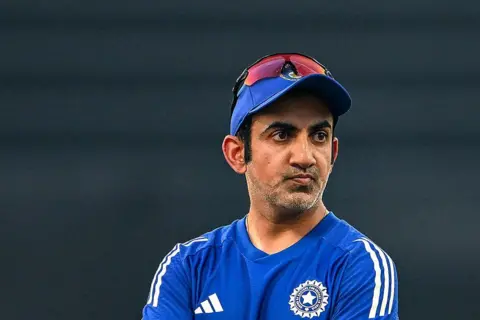
The post-mortem didn't spare just the players - the selection panel and coaching staff were also under fire, fuelled by upset followers and critical former players. In the spotlight of the examination was mentor Gautam Gambhir.
During his post-series press
